Team Goemkarponn
NAGOA: The Nagoa Village Panchayat has emerged as a model for sustainable waste management despite facing mounting pressure from a large floating migrant population linked to the nearby industrial belt.
While the village has a resident population of around 3,000 people, the Panchayat estimates that nearly 8,000 to 10,000 migrant labourers reside in the area, leading to a sharp rise in daily waste generation.
To address the challenge, the Panchayat has established a fully functional Material Recovery Facility (MRF) equipped with an Organic Waste Composter, baling machines, segregation systems and an incinerator unit. Around one tonne of wet waste and 1.5 tonnes of dry waste are generated daily and scientifically processed at the facility instead of being dumped openly.
The Panchayat has also installed a one-tonne-per-day biogas plant where wet waste is converted into useful energy and compost.
Apart from waste management infrastructure, a dog shelter has already been established, while land filling and levelling work for a proposed cow shelter has been completed. Construction of the shed structure and protective surroundings for the facility is also planned.
Most of the projects are being implemented with support from Government schemes and CSR funding, while regular maintenance is handled directly by the Panchayat.
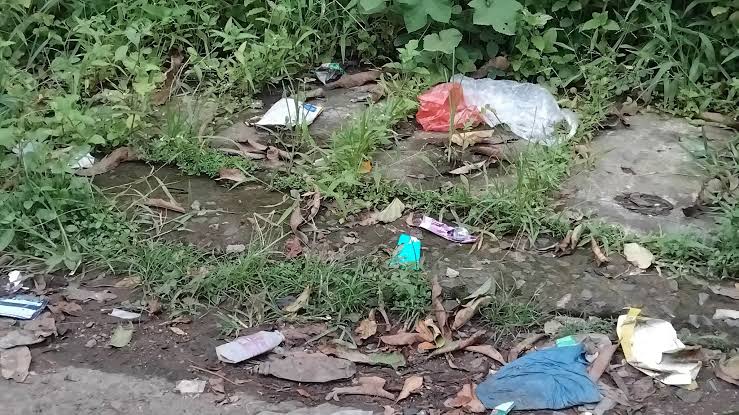
The Panchayat has appointed dedicated sanitation workers for door-to-door waste collection, roadside cleaning drives and segregation of waste at the MRF facility. Authorities said these efforts have significantly reduced roadside garbage dumping and improved cleanliness standards across the village.
To support operational expenses, the Panchayat has introduced a migrant welfare contribution system under which migrant workers residing in rented premises contribute around Rs. 20 per month. The system also helps monitor migrant movement within the village.
For disposal of non-recyclable waste, the Panchayat operates a thermal incinerator system that processes plastic and other dry waste in a controlled and environmentally responsible manner.
Despite the achievements, the Panchayat continues to face challenges including high machinery maintenance costs, repair expenses, limited operational funding and increasing waste generation due to the growing floating population.
Even with these constraints, the Panchayat has managed to maintain cleanliness without imposing garbage collection fees on local villagers, making Nagoa a notable example of community-driven and sustainable waste management in Goa.