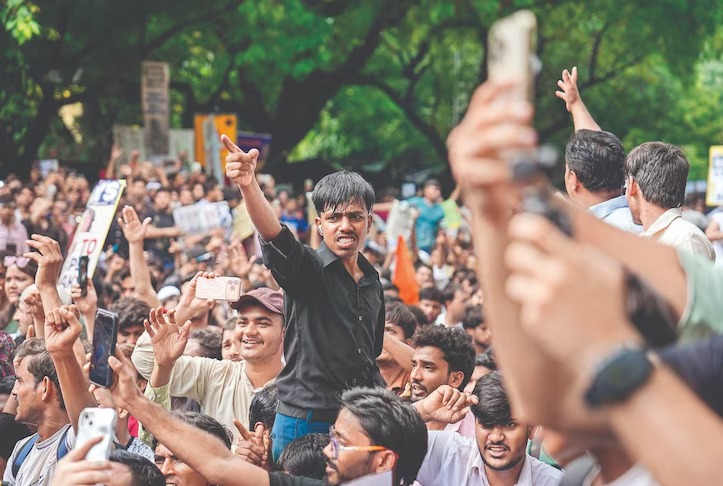
New Delhi: The Cockroach Janta Party (CJP) has taken a firmer position ahead of its third round of talks with the Centre, declaring that the resignation of Education Minister Dharmendra Pradhan remains its primary and non negotiable demand.
CJP spokesperson Ashutosh Ranka said there was no purpose in continuing discussions if the government was unwilling to remove the minister. In a post on X, he stated that Pradhan’s resignation was essential and that further negotiations would serve no purpose if the Centre rejected the demand.
The third round of discussions is scheduled for Saturday afternoon after Union Ministers JP Nadda and Jitendra Singh met CJP representatives for nearly two hours on Friday. During the previous meeting, the government assured the delegation that it would review their demands and respond after internal consultations.
The protesters have placed three key demands before the Centre. These include the resignation of the Education Minister, a guarantee that no legal action will be taken against students participating in the protests, and compensation of ₹1 crore for the families of students who allegedly died by suicide following the NEET paper leak controversy.
According to government representatives, there has been progress on two of the demands. The Centre has agreed in principle to provide protection from legal action for protesters and to consider compensation for affected families. However, the demand for Pradhan’s resignation continues to remain unresolved.
Government sources have maintained that the minister will continue in office, stressing that the administration stands firmly behind him. Officials believe that accountability should be addressed through reforms rather than a resignation.
In recent days, the Centre has announced several measures to tackle examination paper leaks, including the establishment of fast track courts, stricter legal provisions, the replacement of the Education Secretary and the dismissal of 47 officials from the National Testing Agency. Despite these actions, the CJP has insisted that ministerial accountability remains central to resolving the crisis.