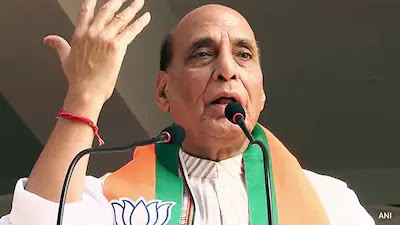
BENGALURU: Defence Minister Rajnath Singh has called for the development of an integrated aerospace ecosystem that meets the requirements of both civil aviation and military operations, while stressing the need to address delays in defence technology projects.
Speaking at a ceremony at Hindustan Aeronautics Limited (HAL), Singh said delays in developing and manufacturing defence equipment could create gaps in critical military requirements and increase costs. He also cautioned that technologies could become outdated by the time projects were completed, making realistic timelines essential.
The event featured the handover of Light Combat Aircraft Tejas twin-seat trainers and Hindustan Turbo Trainer-40 aircraft to the Indian Air Force, along with Dhruv Next Generation helicopters for Pawan Hans Limited.
Singh emphasised that indigenous technology development was essential as warfare continues to evolve. He called for stronger cooperation between public sector organisations and private companies, stating that both should complement rather than compete with each other.
The minister identified artificial intelligence, autonomous systems, unmanned platforms, electronic warfare, cyber technologies and advanced propulsion as key areas requiring domestic development and integration.
He urged scientists, engineers, designers, test pilots and technicians to focus on creating advanced technologies capable of meeting future defence needs. Research and development, he said, must remain a central priority in building India’s aerospace capabilities.
Singh described self-reliance in aerospace as a gradual process requiring consistent progress across multiple technological domains. Aircraft design, avionics, propulsion, composite materials, flight control systems, manufacturing and certification, he noted, would benefit both military and civilian aviation.
Highlighting the changing nature of warfare, he said future air operations would depend heavily on information, advanced technology, integrated systems and rapid decision-making.
He also underlined the importance of the HTT-40, noting that India had traditionally relied on imported aircraft for basic pilot training, while HAL was now producing the trainer domestically for the Indian Air Force.