Team Goemkarponn
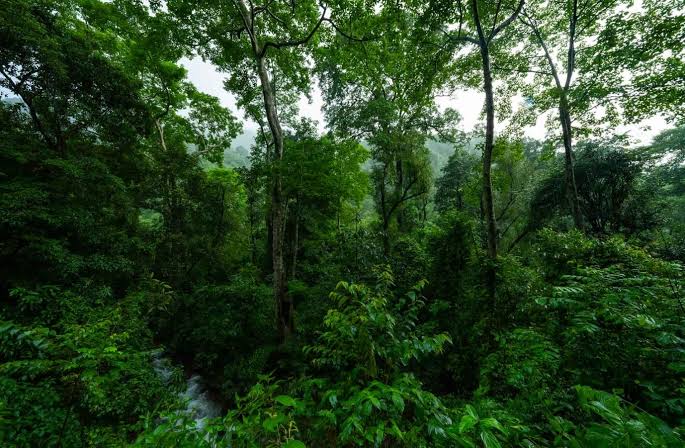
PANAJI: Goa has lost nearly 200 square kilometres of interior forests over the last five decades, with dense forest cover also witnessing a gradual decline, according to a new study that raises fresh concerns about the long-term health of the State’s ecosystems.
The research, conducted by scholars from the Indian Institute of Information Technology (IIIT) Allahabad and Banaras Hindu University, analysed satellite imagery collected between 1973 and 2022 to map changes in Goa’s forests and identify environmentally sensitive areas. The findings were presented at the 2025 IEEE International Conference on Information and Communication Technology.
The study found that dense forest cover in Goa has reduced by 3.75 per cent since 1990. More significantly, researchers observed a growing fragmentation of forest landscapes, resulting in the loss of around 200 sq km of interior forests that once formed continuous ecological habitats.
While Goa continues to retain substantial forest cover, particularly in the Western Ghats, the report warns that shrinking and fragmented forest patches could weaken biodiversity corridors and disrupt wildlife movement across the region.
Researchers noted that despite increasing public debate over mining, infrastructure expansion, monoculture plantations, urban growth and tourism-related projects, there has been limited long-term scientific assessment of how these factors have collectively altered Goa’s landscape over the years.
A major finding of the study is that around 54 per cent of Goa falls within highly sensitive ecological zones that possess significant biodiversity value and serve as important carbon sinks. These areas, classified under the highest ecological sensitivity categories, are considered critical for conservation efforts.
The report also highlights the economic value of Goa’s natural ecosystems, estimating that the State’s forests and mangroves currently store over 56,000 gigagrams of carbon. Researchers suggest that protecting these landscapes could play an important role in climate mitigation while generating environmental and economic benefits.
Beyond documenting ecological changes, the study proposes a new direction for Goa’s tourism sector. Researchers argue that future tourism planning should be guided by environmental data and conservation priorities rather than conventional development models.
The report recommends promoting regenerative tourism initiatives such as nature-based experiences, mangrove restoration programmes, conservation-linked tourism projects and community-led ecological activities. It also calls for stronger legal protection of ecologically sensitive zones, integration of environmental mapping into land-use planning and the creation of dedicated funding mechanisms for restoration projects.
According to the researchers, adopting a conservation-centred approach could enable Goa to safeguard its natural heritage while developing a tourism model that contributes directly to ecosystem recovery and long-term sustainability.