Team Goemkarponn
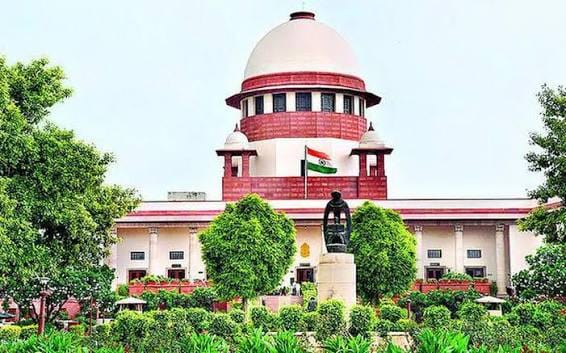
PANAJI: In a significant ruling with far-reaching implications for government workers, the Supreme Court has directed the Goa government to regularise employees engaged through the Public Works Department (PWD) Labour Supply Society, holding that the State cannot refuse permanent employment by relying on procedural shortcomings that arose within its own administrative process.
A Bench of Justice Sanjay Karol and Justice Nongmeikapam Kotiswar Singh allowed an appeal filed by Rupesh Gaonkar and other workers, overturning a 2023 Bombay High Court at Goa judgment that had declined to enforce a 2014 government decision granting the workers temporary status and paving the way for their absorption into the PWD.
The apex court has instructed the State government to formulate a regularisation scheme within four months. The benefit has been limited to members of the PWD Labour Supply Society who were part of the writ petition filed on February 9, 2021.
The court found that the government had accepted and acted upon the 2014 decision for years and could not later invalidate it by pointing to the absence of internal approvals under the Rules of Business.
Emphasising the obligations of a welfare state, the Bench observed that a government cannot continue to utilise the services of workers over several decades while simultaneously refusing to honour its commitment to provide them permanent employment because of administrative deficiencies attributable to the State itself.
The judgment also examined the nature of the PWD Labour Supply Society, noting that it was created by the government to protect labourers from exploitation and to facilitate their eventual induction into government service. The court held that the society could not be treated as an ordinary labour contractor since it functioned under the direct supervision of the State.
The Supreme Court dismissed the government’s concern that the ruling would encourage similar claims from other employees, clarifying that the relief granted is confined only to the appellants covered by the present proceedings.
Under the directions issued by the court, the workers are to be absorbed in the categories assigned during the 2013 classification exercise. If sufficient sanctioned vacancies are unavailable, the State has been asked to create supernumerary posts on a one-to-one basis. These posts will exist only for the concerned employees and will automatically lapse once they retire, resign or otherwise leave service.
The Bench further ruled that the workers will be considered regular employees with effect from February 9, 2021, entitling them to benefits such as seniority and pension. However, it made it clear that they will not be entitled to salary arrears or other monetary benefits for the period preceding the judgment.