Team Goemkarponn
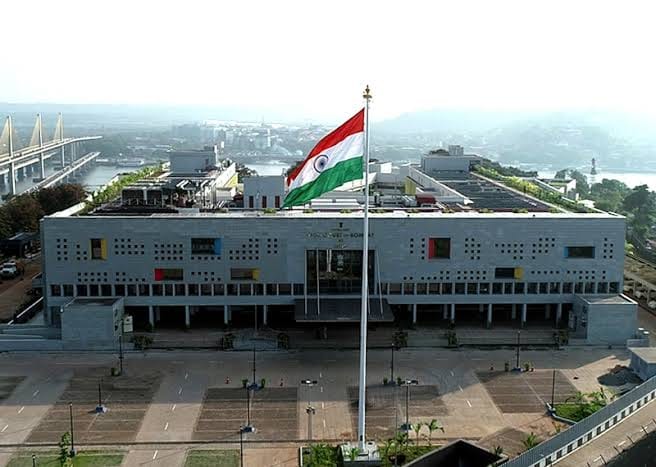
PANAJI: More than a decade after a fatal road accident at Alto-Dabolim, the High Court has set aside the conviction of bus driver John Rodrigues, holding that the prosecution failed to establish the charges of rash and negligent driving beyond reasonable doubt.
The case relates to an accident on February 10, 2012, when an airport-bound bus travelling from Verna reportedly crashed into two cars, a Wagon-R and an Innova, near Floffy Bar at Alto-Dabolim at approximately 5.15 am. The two cars were parked close to the highway’s median divider. The collision claimed the life of Kishan Borkar, while two others suffered injuries.
Vasco Police investigated the incident and filed a chargesheet against Rodrigues. On May 27, 2014, the JMFC Court at Vasco found him guilty of rash driving, causing hurt by an act endangering life and causing death by negligence. He was awarded six months’ simple imprisonment along with a fine of ₹1,500.
His appeal before the Sessions Court at Margao also failed, with the court confirming the conviction on April 23, 2015. Rodrigues subsequently approached the High Court by filing a criminal revision application against both orders.
During the revision proceedings, the defence questioned the credibility of the prosecution’s case, particularly the circumstances in which the accident-site documentation was prepared. It pointed out that none of the ten prosecution witnesses had directly witnessed the collision.
The defence also drew attention to the testimony of panch witness Simon Pinto, who reportedly admitted that his signatures on the spot panchanama had been obtained at Vasco Police Station and not at the accident location.
Another significant argument concerned the position of the two parked cars. The defence maintained that they were stationed on the right side of the road, close to the median and immediately beyond a blind curve, creating a potentially dangerous obstruction for approaching traffic.
The prosecution, however, sought to defend the conviction, contending that both the trial court and the Sessions Court had independently assessed the evidence and reached the same conclusion.
After examining the material on record, the High Court found serious shortcomings in the manner in which the evidence had been evaluated by the lower courts. It observed that there was no material to demonstrate that Rodrigues had fallen asleep at the wheel or had driven the bus in a rash or negligent manner.
The court also took note of the location of the parked vehicles along the median at a natural curve in the highway, observing that this important aspect had not received due consideration in the earlier proceedings.
Holding that the prosecution had failed to establish the essential elements of the alleged offences beyond reasonable doubt, the High Court allowed Rodrigues’ revision plea, quashed the earlier conviction and acquitted him of all charges.