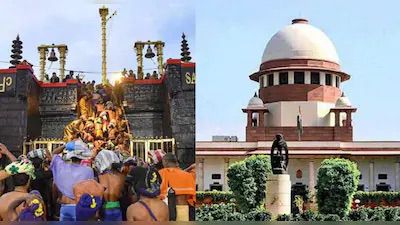
New Delhi: The Supreme Court of India has observed that religious traditions cannot be diluted under the pretext of social reform, as it continued hearings on petitions related to the Sabarimala Temple entry issue. The court underlined that essential religious practices must be respected while addressing constitutional questions.
A nine judge bench led by Chief Justice Surya Kant is examining the broader legal issues arising from the case, particularly the delicate balance between the right to religious freedom and the need for social reform. During the proceedings, the court acknowledged the complexity of determining whether long standing beliefs held by millions can be declared incorrect.
The matter traces back to a 2018 judgment that allowed women of all age groups to enter the Sabarimala temple, overturning a traditional restriction on women between 10 and 50 years. That ruling had described the practice as discriminatory and inconsistent with constitutional values.
In the ongoing review, several judges raised concerns about judicial intervention in deeply held religious matters. Questions were also posed on whether courts should adjudicate such issues without hearing the broader community of devotees.
Legal arguments presented during the hearing focused on interpreting constitutional provisions governing religious freedom and institutional autonomy. It was argued that while individuals have the right to practice their faith, religious institutions must also retain the authority to manage their internal affairs, provided such practices do not violate public order, morality or health.
The court also examined the scope of laws aimed at social reform, noting that such measures must be carefully applied to avoid altering the core identity of a religion. The debate extended to whether courts should determine what constitutes an essential religious practice, with some arguments suggesting that such assessments should rest with the community itself.
The hearing is set to continue, as the court deliberates on one of the most sensitive intersections of law, faith and social change in the country.