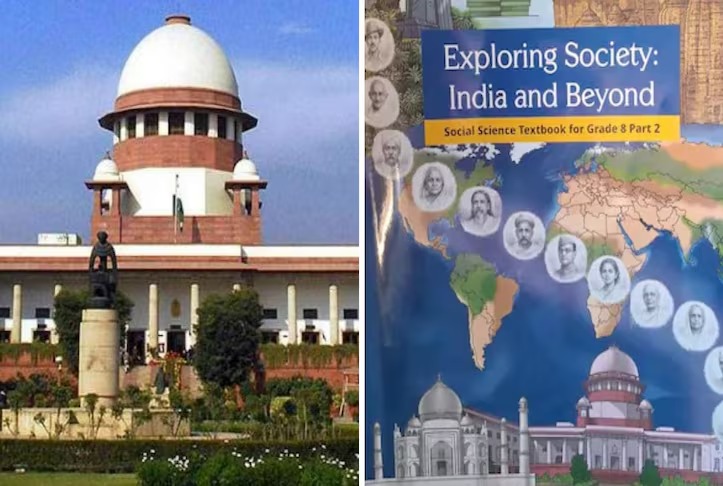
New Delhi: The Supreme Court of India on Thursday took strong exception to a controversial section in a newly released Class 8 Social Science textbook published by NCERT, ordering an immediate ban on the book and directing that all physical and digital copies be seized. The court said it would conduct a deeper inquiry to identify those responsible and made it clear that the matter would not be closed without accountability.
A bench led by Chief Justice Surya Kant expressed outrage over references to “corruption in the judiciary” contained in a chapter titled “The Role of the Judiciary in Our Society.” The court described the inclusion as a serious institutional affront and warned that such content, if left unchecked, could erode public faith in the justice system.
The bench imposed a blanket prohibition on the sale, circulation, or online sharing of the textbook, whether in full or in part. Notices were issued to the Union government and the NCERT chairman, seeking explanations on how the material was approved and published.
Appearing for NCERT, Solicitor General Tushar Mehta told the court that the individuals responsible for drafting the contentious portion would be barred from working with any ministry or the University Grants Commission in the future. He also submitted that only a limited number of copies had entered the market and that distribution had been halted. The court, however, rejected these assurances as inadequate, stating that mere corrective action after publication did not address the gravity of the lapse.
The Chief Justice sharply criticised an NCERT statement that described the issue as an “error of judgement,” observing that it stopped short of a clear apology. He also noted that copies of the book were still available despite claims of withdrawal. The court further objected to references in the chapter discussing judicial delays, saying such framing was inappropriate for school students.
The matter came before the court after the Chief Justice personally reviewed the textbook and consulted fellow judges, all of whom agreed that urgent intervention was necessary. Acting on its own motion, the court initiated proceedings to ensure responsibility is fixed and institutional integrity preserved.
Sorry, there was a YouTube error.