Team Goemkarponn
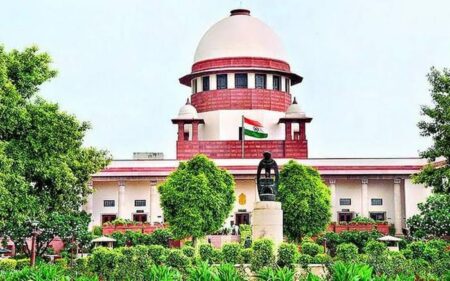
PANAJI: The High Court has sought a detailed explanation from the Goa government over its proposal to acquire land occupied by an unauthorised statue of Chhatrapati Shivaji Maharaj at Headland Sada, Vasco, questioning why the authorities are considering a purchase instead of acting on an existing order to clear the site.
During the proceedings, the court expressed serious reservations about the administration’s approach and observed that there appeared, at the preliminary stage, to be a “conspiracy to violate the order”. It also questioned whether public money could legitimately be spent to acquire property in circumstances involving an alleged unauthorised occupation.
The Chief Secretary has been directed to file an affidavit by October 20, 2026, setting out the legal grounds, administrative decisions and circumstances that led to the proposed acquisition of the disputed land from the Mormugao Port Authority (MPA).
The case concerns a 178-square-metre plot owned by the MPA at Headland Sada junction. A statue of Chhatrapati Shivaji Maharaj, accompanied by masonry and beautification works, was installed on the property without the port authority’s permission in February 2026. The statue was unveiled on February 19, reportedly in the presence of Mormugao MLA Sankalp Amonkar.
After seeking action from the relevant authorities, the MPA moved the High Court. On April 7, 2026, the court directed the South Goa District Collector, Superintendent of Police and local executive magistrates to provide the necessary security and assistance for removing the encroachment.
The court had previously criticised the local administration’s handling of the matter, expressing concern over its failure to ensure compliance. Local residents subsequently challenged the order before the Supreme Court, but withdrew their petition on July 2, 2026.
The removal remained pending, with officials citing potential law-and-order complications and police deployment commitments.
The issue returned to the High Court on September 9, when the MPA sought oral permission to withdraw its petition. The request followed a September 8 communication from the Goa government’s Commissioner-cum-Secretary (Revenue) to the MPA Chairman, informing him that the State Cabinet had given in-principle approval to purchase the disputed plot.
The government’s stated concern was that removing the statue could lead to a law-and-order problem amid strong public sentiment surrounding the issue.
The proposed acquisition prompted the court to question the decision to negotiate a purchase while its earlier directions remained in force. It also cautioned the MPA that agreeing to a sale after approaching the court for removal of the encroachment could expose the authority to allegations of misuse of legal proceedings.
The court stressed that claims of public interest must be examined carefully when public funds are proposed to be spent on property occupied by a structure allegedly erected without the landowner’s consent.
It also sought answers on why those allegedly responsible for entering the land and erecting the structure had not been identified and booked by the police, despite the passage of several months.
The affidavit must provide the records of meetings, discussions and decisions preceding the September 8 letter. The State government has also been asked to specify the statutory provisions, policies or rules that would authorise the use of public funds to purchase land in a bid to regularise an unauthorised encroachment.
The High Court has made it clear that the deadline will not be extended. The matter is listed for further hearing on October 21, 2026.