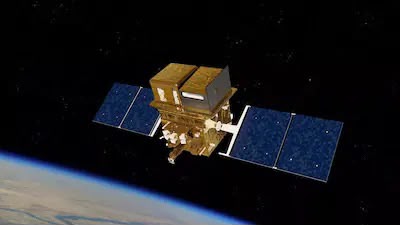
New Delhi: India and France are preparing to take their long standing space partnership into a new phase with the TRISHNA satellite, an Earth observation mission designed to study water stress, surface temperatures and changes in the planet’s water cycle.
TRISHNA, short for Thermal infraRed Imaging Satellite for High resolution Natural resource Assessment, is being jointly developed by the Indian Space Research Organisation and France’s CNES. The satellite is currently scheduled for launch in 2027.
The mission is designed to provide surface observations at around 60 metre resolution, with the same locations potentially observed every three days at the equator. This combination of detailed imagery and frequent revisits is intended to provide scientists with a clearer picture of how water moves through ecosystems.
TRISHNA will measure surface temperature and related variables across agricultural land, forests, cities, coastal areas, glaciers and inland water bodies. Its data will help monitor plant water stress, evaporation and evapotranspiration, while also supporting research into droughts, irrigation, urban heat and glacier changes.
The satellite will carry two major payloads. CNES is providing the thermal infrared instrument, while ISRO is developing the visible, near infrared and shortwave infrared instrument. Together, the instruments will provide complementary information about Earth’s surface and its energy and water cycles.
For farmers and water managers, the information could help improve irrigation and track changing water availability. Scientists will also be able to study environmental changes with greater spatial and temporal detail.
TRISHNA builds on decades of cooperation between India and France in space science. Earlier joint missions such as Megha Tropiques established a strong foundation for collaboration in Earth observation.
The latest mission represents another step in that partnership, using advanced satellite technology to better understand a planet facing growing pressure on its water resources.