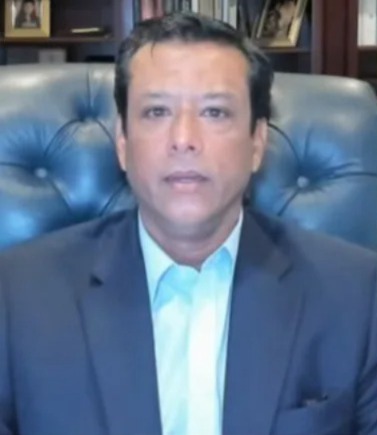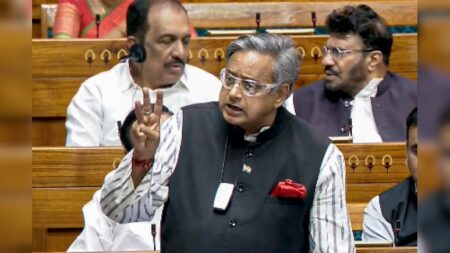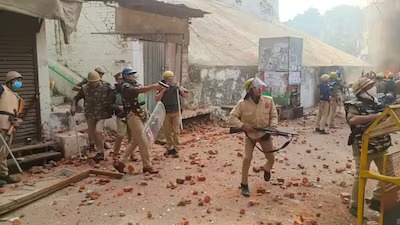
New Delhi: A judicial commission investigating the 2024 Sambhal violence has concluded that the unrest was “pre planned” and has pointed to the alleged involvement of Samajwadi Party MP Zia ur Rahman Barq and Suhail Iqbal, the son of SP MLA Iqbal Mehmood. The commission’s report was tabled in the Uttar Pradesh Assembly on Wednesday.
According to the findings, the violence was not spontaneous but the result of a planned conspiracy driven by political motives. The report also states that misleading information about the Archaeological Survey of India monitored survey of the Shahi Jama Masjid was circulated among sections of the Muslim community before the clashes, contributing to heightened tensions.
The commission rejected allegations that police firing caused the deaths during the violence. Instead, it concluded that the fatal bullets were not fired by the police and alleged that rioters attempted to seize weapons from security personnel during the confrontation.
The violence erupted on November 24, 2024, while an ASI monitored survey of the Shahi Jama Masjid was underway. The clashes left four people dead and several others injured, prompting the Uttar Pradesh government to appoint a three member judicial commission to investigate the incident.
The report also draws attention to demographic changes in Sambhal, stating that the district’s Hindu population has declined from around 45 percent at the time of Independence to approximately 15 percent, while Muslims now account for nearly 85 percent of the population.
Referring to the commission’s findings, Uttar Pradesh Chief Minister Yogi Adityanath said the report had exposed the conspiracy behind the violence. He stated that the state had moved away from a policy of appeasement towards one focused on equal satisfaction and asserted that there was no place for demographic imbalance in Uttar Pradesh.
The commission also provides historical context, tracing communal tensions in Sambhal back to the 1950s. It cites several major incidents of communal violence between 1953 and 1976, including clashes linked to religious disputes, political tensions and attacks on public representatives, suggesting that the district has witnessed repeated episodes of unrest over the decades.
Sorry, there was a YouTube error.