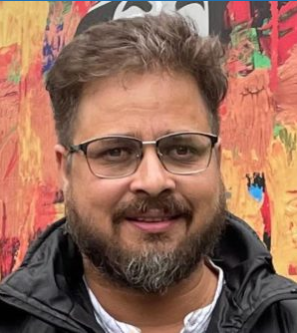
“Manoj Parab understood this anger better than most politicians. He did not emerge from traditional party structures. He emerged from agitation, public outrage, and digital mobilisation. His appeal lay in sounding less like a politician and more like an aggrieved citizen. That authenticity helped him build a following, especially among younger Goans disillusioned with both the BJP and Congress.
The RGP’s entry into electoral politics was therefore significant. Even with limited electoral success, the party demonstrated that there was space in Goa for a regional force rooted in identity politics and local anxieties. It disrupted conversations. It unsettled established parties.”
The resignation of Manoj Parab from the Revolutionary Goans Party is not just another episode of political infighting. It is the moment when a movement that once promised to reshape Goa’s political imagination suddenly finds itself staring at irrelevance. The question is no longer who controls the party. The real question is whether the revolution itself has exhausted its purpose before it could fully mature.
For years, the Revolutionary Goans movement occupied a space no mainstream political party was willing to touch with honesty. It articulated anxieties many Goans discussed privately but rarely heard in formal politics. Concerns about land alienation, migration, unemployment, identity, and the erosion of local control became the emotional fuel behind the rise of the RGP.
Manoj Parab understood this anger better than most politicians. He did not emerge from traditional party structures. He emerged from agitation, public outrage, and digital mobilisation. His appeal lay in sounding less like a politician and more like an aggrieved citizen. That authenticity helped him build a following, especially among younger Goans disillusioned with both the BJP and Congress.
The RGP’s entry into electoral politics was therefore significant. Even with limited electoral success, the party demonstrated that there was space in Goa for a regional force rooted in identity politics and local anxieties. It disrupted conversations. It unsettled established parties. Most importantly, it gave many voters the feeling that someone was finally speaking their language.
But movements built on emotion eventually collide with the hard realities of political organisation.
Street energy alone cannot sustain a political party. A protest movement thrives on confrontation and moral clarity. Electoral politics demands structure, negotiation, discipline, and institutional patience. This is where the RGP appears to have faltered. The internal conflict between Manoj Parab and MLA Viresh Borkar exposed not merely a personality clash, but the deeper fragility of the organisation itself.
Regional parties often rise rapidly around charismatic figures. Yet the same centralisation that helps them grow can also destroy them from within. Once disagreements emerge, there are rarely strong internal mechanisms to manage dissent. Personal disputes begin consuming political purpose. The party slowly turns inward while the public moves on.
Parab’s resignation carries symbolic weight because he was not just a party leader. He was the face of the movement. For many supporters, the Revolutionary Goans movement and Manoj Parab were inseparable. His exit creates an ideological vacuum that cannot be filled merely through organisational reshuffling.
Viresh Borkar may now emerge as the dominant face within the party structure. As the RGP’s only MLA, he possesses electoral legitimacy and visibility. In the narrow sense of internal politics, he may appear to have won. But such victories can be dangerously hollow. If the party loses the emotional credibility that originally attracted supporters, organisational control alone means little.
In reality, the biggest winner may be the established political order that the RGP once challenged. The BJP, in particular, benefits whenever regional opposition fragments. A divided regional force weakens the possibility of a coherent alternative emerging outside national party structures. The irony is difficult to ignore. A movement born out of resistance to political centralisation may ultimately strengthen the dominance it sought to oppose.
Yet it would also be premature to declare the movement entirely dead.
The social anxieties that fuelled the rise of Revolutionary Goans have not disappeared. Land conflicts remain contentious. Questions of identity continue to resonate deeply. Economic insecurity among local youth persists. The emotional undercurrent that gave the movement life still exists across Goa. What has weakened is not the sentiment, but public faith in the leadership’s ability to transform that sentiment into sustainable politics.
This episode offers an important lesson for every emerging political movement in Goa. Anger can mobilise people quickly, but it cannot substitute institution-building. Social media influence is not the same as organisational depth. Charisma cannot replace internal democracy. Any political force seeking long-term relevance must eventually evolve beyond personality-driven politics.
That is the larger tragedy of the RGP’s current crisis. It was never merely a party. It represented an unfinished aspiration for regional political assertion in Goa. Many supporters did not see it simply as an electoral platform. They saw it as resistance, identity, and self-preservation.
Today, that aspiration stands bruised.
Whether the RGP survives this moment depends on whether it can rediscover a collective purpose beyond individual rivalries. If it cannot, then Manoj Parab’s resignation may eventually be remembered not as the fall of one leader, but as the point where a revolution lost direction before it could truly become a movement capable of governing.