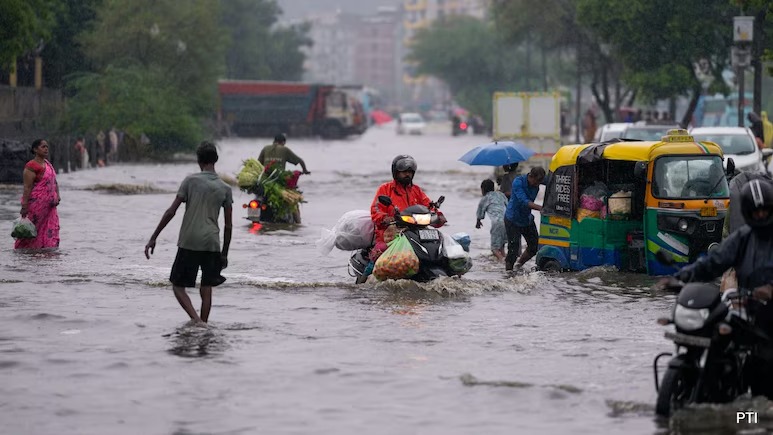
New Delhi: As the monsoon sweeps across India, waterlogged roads, flooded neighbourhoods and traffic chaos have once again become a familiar sight, exposing long standing weaknesses in urban planning and civic infrastructure. Experts warn that unless cities adopt long term solutions, seasonal flooding could become an even greater challenge in the years ahead.
For thousands of residents, waterlogging is more than an inconvenience. It disrupts daily life, damages property, affects livelihoods and increases the risk of disease. Workers struggle to commute through flooded streets, while motorists face stalled vehicles, damaged engines and hours of gridlock. Cities such as Gurugram and Mumbai continue to witness recurring flooding despite repeated efforts to improve drainage systems.
Urban planners and environmental experts attribute the crisis to a combination of rapid urban expansion, inadequate stormwater infrastructure and increasingly intense rainfall linked to climate change. As cities expand, natural drainage channels, wetlands and ponds that once absorbed excess rainwater have been replaced by roads, buildings and concrete surfaces. This prevents rainwater from seeping into the ground and leaves it with nowhere to flow during heavy downpours.
Experts also point to poor maintenance of drainage networks, unchecked encroachments and construction projects that disrupt natural water pathways. They stress that civic authorities must strengthen drainage systems, regularly desilt drains and enforce better planning regulations, while developers should incorporate natural water flow into urban designs.
Many specialists advocate adopting the “sponge city” model already implemented in countries such as China and the Netherlands. The approach uses permeable pavements, green roofs, wetlands and rainwater harvesting systems to absorb and store excess rainfall, reducing flood risks while improving groundwater recharge.
At the same time, experts emphasise that preventing waterlogging requires active public participation. Responsible waste disposal, preventing drain blockages and protecting natural water bodies are seen as equally important alongside government action. They argue that only a coordinated effort combining sustainable urban planning, ecological conservation and stronger civic responsibility can help Indian cities cope with increasingly unpredictable monsoon seasons.
Sorry, there was a YouTube error.