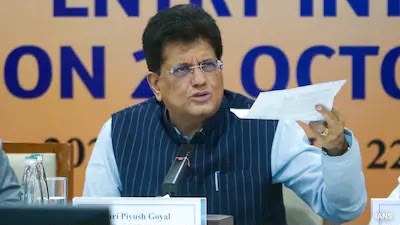
BERLIN: Union Commerce and Industry Minister Piyush Goyal has criticised developed nations for failing to adequately honour their climate finance commitments, questioning the delivery of the promised $100 billion annual support for developing countries under international climate agreements.
Addressing a roundtable at the Berlin Global Dialogue, Goyal highlighted the responsibility of wealthy nations for historical carbon emissions and called for greater financial and technological assistance to developing countries, particularly those facing significant challenges in transitioning to cleaner energy.
Recalling the 2015 Paris climate conference, Goyal said developed countries had committed to supporting developing and less developed nations, including vulnerable island countries, in addressing climate change.
He expressed frustration over the delays in fulfilling these commitments, arguing that promises of financial assistance had not translated into sufficient support for countries seeking to reduce emissions while meeting their development needs.
The $100 billion annual climate finance target was first announced at the 2009 United Nations climate conference in Copenhagen, with the aim of mobilising funds for developing countries by 2020. At the 2015 Paris climate conference, the commitment was extended through 2025 after the original target was not met within the stipulated period.
Goyal also questioned the European Union’s approach to climate policy, particularly its Carbon Border Adjustment Mechanism (CBAM), which imposes a carbon related cost on certain imported goods. He argued that developed economies must address their historical contribution to global emissions while ensuring that climate measures do not place an unfair burden on developing countries.
Highlighting the disparity between population shares and emissions, Goyal noted that India accounts for approximately 17 per cent of the world’s population but contributes less than 3 per cent of global carbon emissions. He also stressed that India’s per capita emissions remain significantly below European levels.
The minister said India faces the dual responsibility of meeting the energy, food and security needs of 1.4 billion people while advancing its environmental commitments.
Despite these challenges, he emphasised that India continues to expand its clean energy programmes and promote resource efficiency and the circular economy.
Goyal’s remarks underscored India’s position that climate action must be accompanied by equitable financing, technology transfer and greater accountability from developed nations to support a fair global energy transition.