NEW DELHI: Former CIA director David Petraeus has said a human made the final decision to carry out the bombing of Shajarah Tayyebeh Elementary School in Minab, southern Iran, while artificial intelligence assisted with targeting.
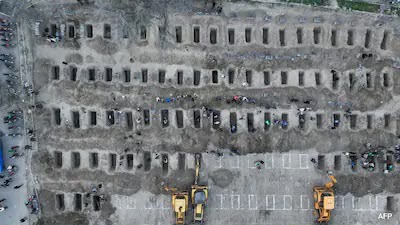
The strike reportedly killed at least 156 people, including children, raising serious questions about the use of AI powered systems in military operations and the responsibility for errors involving civilian targets.
Speaking at the NDTV World Summit, Petraeus rejected the suggestion that a machine independently made the decision to attack the school. He maintained that human judgement remained central to the targeting process, even as AI tools were increasingly used to support military decisions.
Petraeus acknowledged that mistakes had occurred in military operations in the Middle East and Ukraine, stressing that people continued to make the final decisions to launch attacks. He also advocated developing systems that operate within clearly defined criteria and instructions established by humans.
His remarks come amid scrutiny of an earlier investigation into the bombing, which examined the role of the US military’s AI enabled targeting system, the Maven Smart System, developed by Palantir Technologies.
According to the investigation, US military planners had sought to identify strategic targets that could weaken Iran’s military capabilities at the beginning of the conflict. Some personnel within US Central Command reportedly relied heavily on AI tools to identify potential targets and plan initial attacks.
The school’s location added to concerns surrounding the incident. The institution had been built on land previously occupied by an Iranian Revolutionary Guard Corps naval unit. Its classification as a military facility reportedly remained uncorrected in the targeting system, allowing it to emerge among the recommended targets for the opening phase of the campaign.
The Maven system processes information from more than 150 data inputs to assist commanders with intelligence analysis, target identification and operational planning. Its use has significantly shortened processes that traditionally required hours of work by intelligence specialists, legal advisers and military commanders.
The incident has intensified debate over whether the growing speed and influence of AI in warfare could increase the risk of targeting errors. Petraeus’s comments underscore the continuing question of accountability when human decisions are shaped by machine generated recommendations in high stakes military operations.