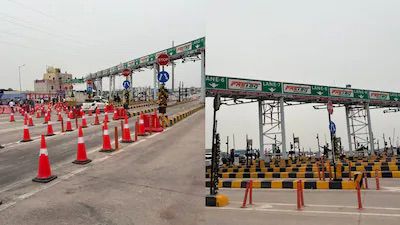
New Delhi: Delhi-NCR has introduced its first barrier free toll collection system, marking a major shift in highway travel and traffic management. The new Multi Lane Free Flow (MLFF) tolling system was inaugurated by Nitin Gadkari at the Mundka-Bakkarwala toll plaza on the Urban Extension Road II corridor.
The technology driven system removes the need for physical barriers, toll booths and manual operators, allowing vehicles to move through toll lanes without stopping. Authorities believe the move will significantly reduce congestion, fuel consumption and delays commonly experienced at toll plazas.
The MLFF system works using a combination of Automatic Number Plate Recognition cameras and FASTag based payment technology. Each lane has multiple cameras that identify the registration number of moving vehicles and instantly match the details with the FASTag account linked to the vehicle.
Once verified, the toll amount is deducted automatically without requiring motorists to slow down or stop near scanners. Officials say the system ensures smoother movement of traffic while improving efficiency in toll collection.
Vehicles without a valid FASTag or with insufficient balance will still be identified through the camera network. In such cases, an electronic notice will be sent to the registered owner demanding payment of the toll amount.
Authorities said if the payment is not cleared within 72 hours, a penalty amounting to one and a half times the original toll fee will be imposed. Repeated violations could lead to suspension of FASTag services, cancellation of driving licences and even vehicle seizure.
The government plans to gradually expand the technology across the country. According to officials, India currently has more than 1,300 toll plazas on national highways, and the new system is expected to save nearly Rs 7,000 crore annually while reducing fuel wastage and carbon emissions.
The barrier free tolling system became operational at midnight and has already received positive feedback from commuters, many of whom said it would help ease traffic jams and reduce travel time during peak hours.
Officials also stated that cash payments at toll plazas nationwide have already been discontinued, further accelerating the transition towards a fully digital toll collection network.