Team Goemkarponn
MARGAO: Patients in South Goa could increasingly access advanced diagnostic tests and specialist consultations closer to home, with the government expanding facilities at South Goa District Hospital in Margao to reduce dependence on Goa Medical College and Hospital (GMC).
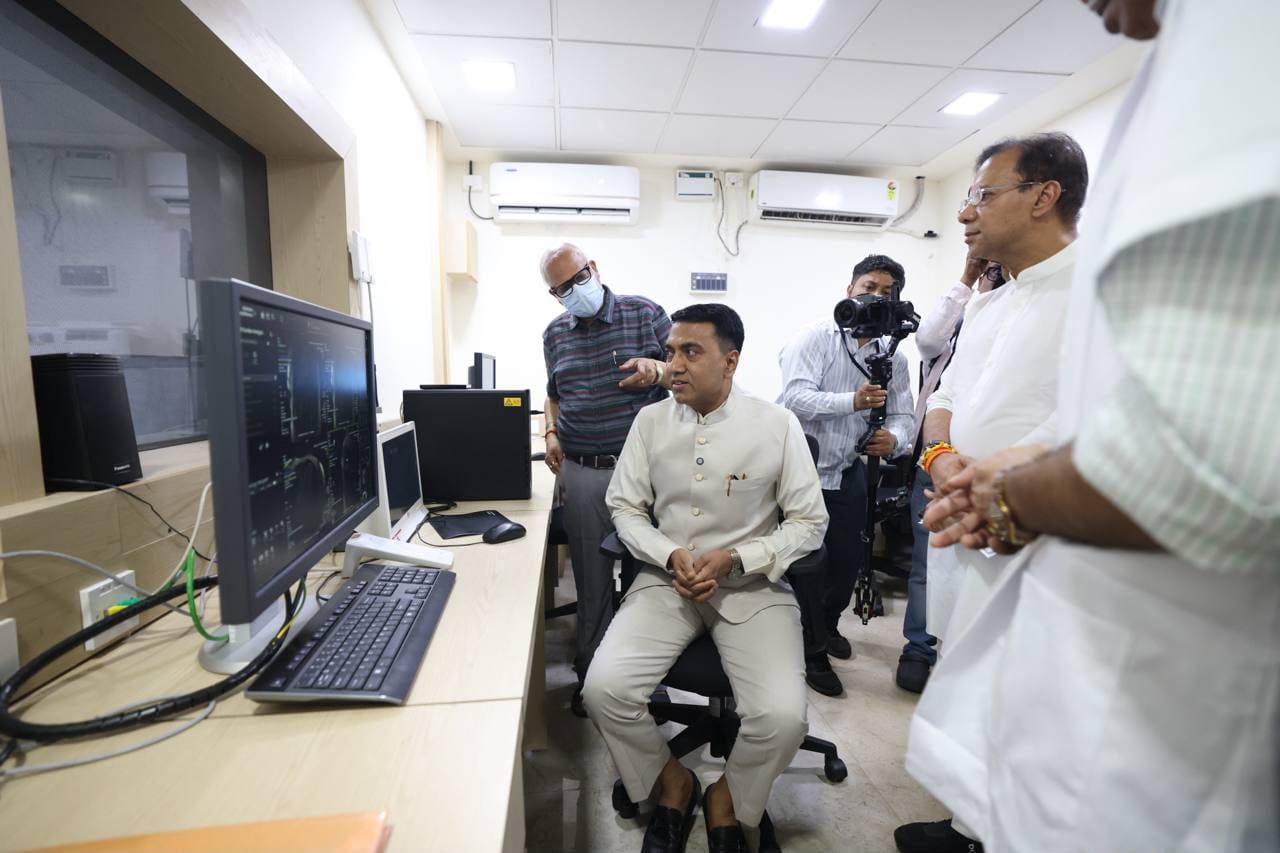
Chief Minister Dr Pramod Sawant inaugurated the hospital’s MRI and echocardiography facilities, along with Cardiology and Nephrology units, on Friday, marking a major expansion of specialised healthcare services in the district.
The government has invested approximately ₹12 crore in the MRI facility, while the echocardiography machine cost around ₹35 lakh. The upgraded infrastructure is expected to benefit nearly 30 per cent of South Goa’s population by improving access to diagnosis and treatment and reducing referrals to GMC.
Under the expanded services, a cardiologist from GMC will be available three times a week, while nephrology consultations will be conducted every Monday, Wednesday and Friday. The arrangements are intended to bring specialist care closer to patients who might otherwise need to travel for consultations.
The expansion forms part of a broader effort to strengthen public healthcare infrastructure across Goa. Sawant also announced plans to introduce telemedicine services, allowing patients to consult doctors remotely and potentially reducing unnecessary hospital visits. He noted that more than one lakh people had already used GMC’s online OPD appointment facility.
The government is also planning to establish an ESI Medical College in South Goa and renovate the old Hospicio Hospital building for use as a nursing college. The latter move is expected to create additional space at the new district hospital for patient care.
Other initiatives highlighted by the Chief Minister included free dialysis services at 16 locations across Goa, free varicose vein treatment at Bicholim Hospital and financial assistance through the Deen Dayal Swasthya Seva Yojana and the Chief Minister’s Medical Assistance Cell.
The challenge ahead will be to ensure that the new facilities are supported by adequate staffing, timely appointments and consistent specialist availability so that patients can benefit from the expanded infrastructure.
Why this angle works: It focuses on the practical impact for patients — fewer referrals, easier access to scans and specialist consultations — while ending with the key question of whether staffing and service availability will match the new infrastructure.