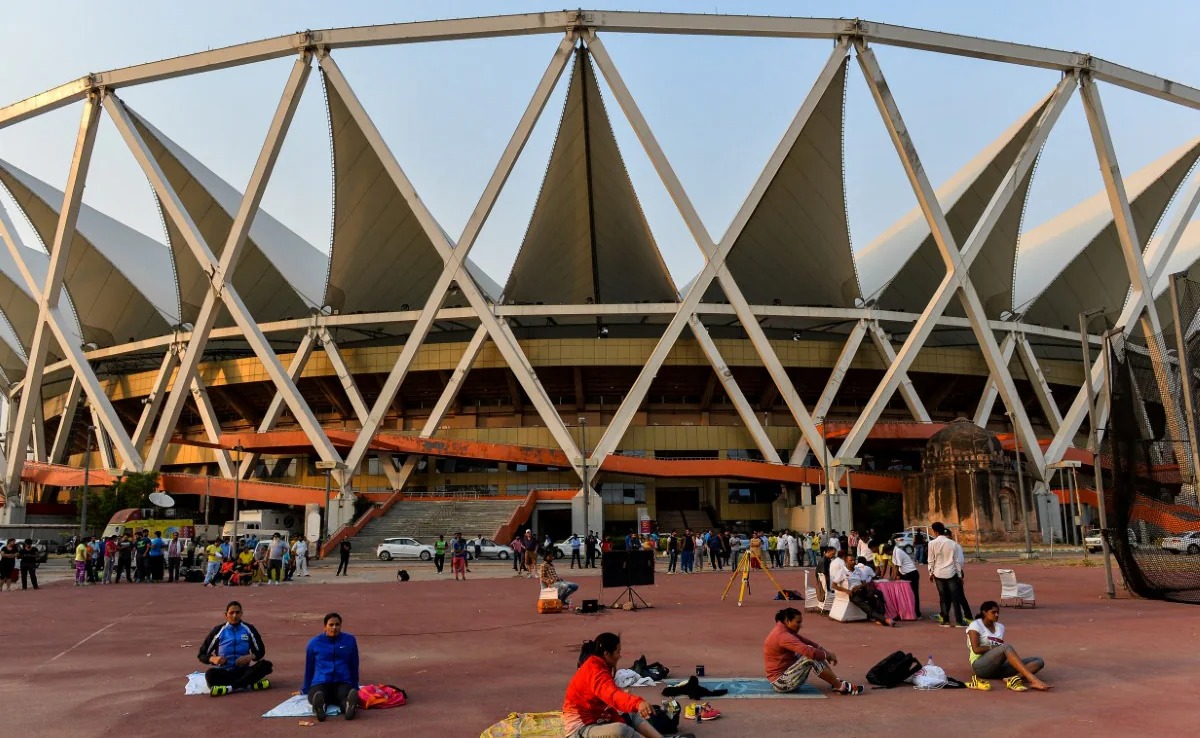
New Delhi: The government is exploring a major redevelopment of the Jawaharlal Nehru Stadium site, aiming to convert the 102-acre complex into a full-fledged sports city that brings elite training, community participation and modern broadcast capabilities under one campus. While the concept has gained momentum within the sports ministry, officials emphasise that no timeline has been set for breaking ground or completing the project.
According to ministry sources, the goal is to create a multi-sport environment with indoor arenas, outdoor pitches, athlete housing and commercial spaces, supported by an on-site broadcast studio. Teams studying the proposal are closely examining examples from Qatar and Australia to understand long-term venue use, event hosting models and high-performance pathways.
The push for redevelopment stems from the stadium’s underutilisation. Despite being extensively upgraded for the 2010 Commonwealth Games and once serving as a focal point for major events, only about 28 percent of the complex is currently in active use. The gap between its potential and present-day functioning, along with rising demand for year-round training and media-driven sports programming, has prompted the rethink.
Internal planning documents outline several key objectives. The project seeks to break the single-stadium model into multiple specialised venues to ensure continuous use. It aims to balance high-performance sport with community access, provide purpose-built spaces for federations, and develop commercial avenues that can sustain the precinct financially. A dedicated broadcast studio is envisioned to help federations produce content regularly and improve sponsorship value, something existing venues struggle to achieve.
The international study tour has highlighted several features India hopes to incorporate, such as integrated athlete villages, centralised sports science centres, flexible indoor arenas, strong public transport connectivity, fan engagement zones and advanced media infrastructure. Examples abroad also stress the importance of designing legacy into the project from the outset to avoid expensive underused assets.
However, significant challenges lie ahead, including approvals, funding structures, public-private partnerships and the operational planning required to keep a multi-venue precinct active throughout the year. Managing the transition for current users of the stadium will also be crucial.
For now, the proposal remains in the study phase, though recent official visits to Qatar underscore the seriousness of the effort. The coming months will determine whether the sports city vision becomes a landmark project for Delhi or remains another ambitious plan awaiting execution.