Team Goemkarponn
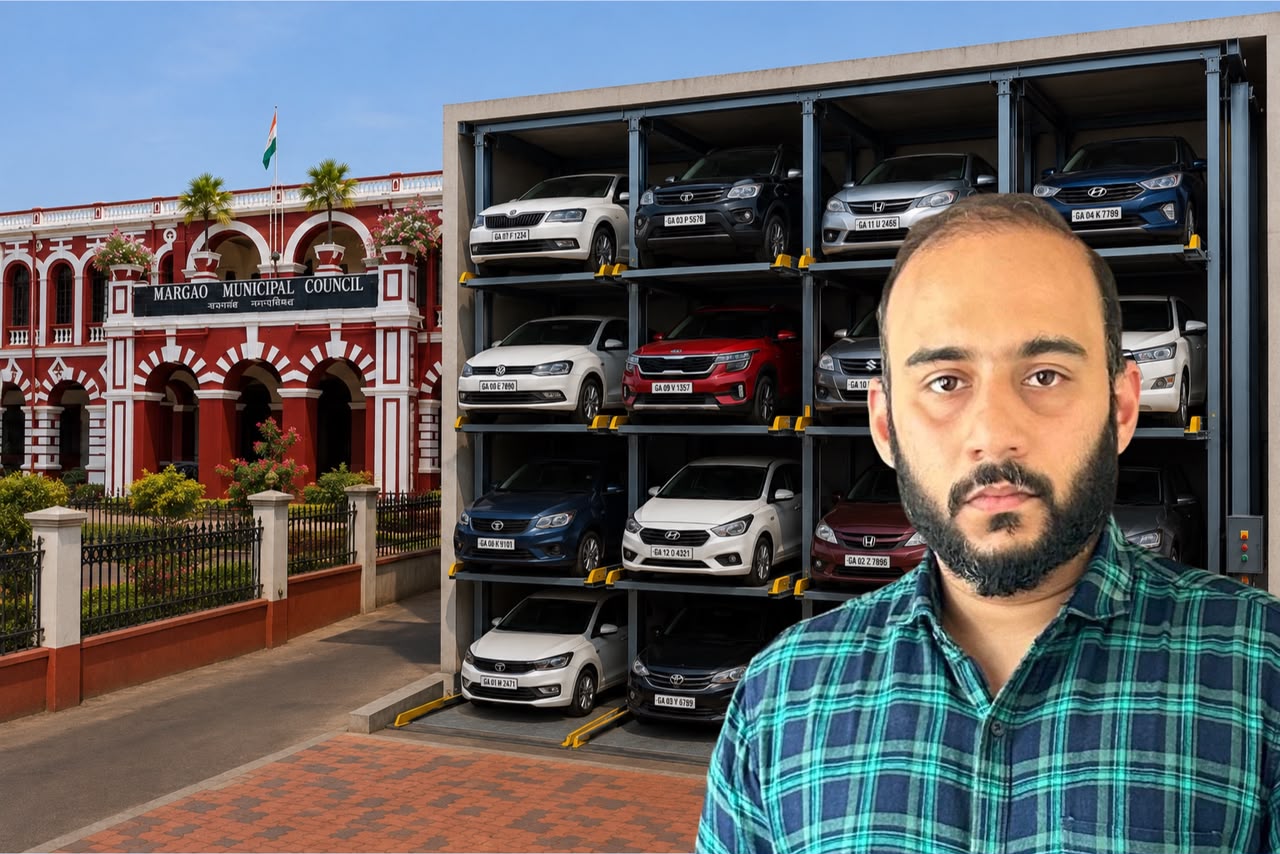
MARGAO: Madganvcho Awaaz and youth leader Prabhav Naik on Friday urged the Goa State Urban Development Agency (GSUDA) not to rush the proposed Hydraulic Parking Project for Margao without first conducting a comprehensive technical and financial feasibility study.
Naik, accompanied by social worker Wency Cirilo Angelo Gonsalves and Prakash Shetkar, met GSUDA engineers and expressed concerns over the suitability of hydraulic parking systems for Goa’s climatic conditions.
“Hydraulic parking may sound attractive on paper, but Margao is not a laboratory for untested experiments. Goa’s climatic conditions demand a comprehensive feasibility study before any decision is taken. We will not allow haphazard projects imposed merely to create opportunities for election fund generation,” Naik said.
He pointed out that hydraulic lift parking systems require regular servicing, dedicated manpower and high maintenance, while also being vulnerable to corrosion and rusting in Goa’s humid coastal climate. Without proper assessment, he warned, the project could become another costly and non-functional “white elephant.”
During the meeting, Naik questioned GSUDA officials over the absence of a response to the detailed memorandum he had submitted on September 22, 2025, seeking information on the feasibility and viability of the proposed project. He said the memorandum specifically sought details regarding technical studies, consultants involved and the operational models being considered.
Naik also sought information on similar hydraulic parking projects implemented by GSUDA or other agencies and asked how many such projects are currently functional. He further requested details of the consultants associated with the project and their experience in executing similar projects in coastal regions with climatic conditions comparable to Goa.
Expressing dissatisfaction over the information furnished by GSUDA in response to his RTI application, Naik demanded complete disclosure regarding feasibility studies, consultant appointments, expenditure incurred, maintenance responsibilities and the tendering process.
He maintained that transparency and accountability are essential before committing substantial public funds to the proposed infrastructure project.