Team Goemkarponn
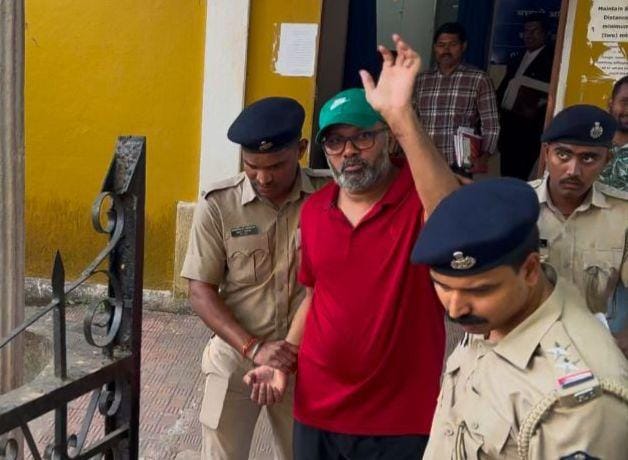
MAPUSA: The North Goa Additional Sessions Court at Merces has granted bail to businessman Siddique alias Suleman Khan in connection with an alleged land-grabbing and forgery case dating back to 2020.
The court took into consideration a forensic report from the Central Forensic Science Laboratory (CFSL), Pune, which did not conclusively connect Khan’s handwriting or signature with the disputed document. The court also noted that no forged seals had been recovered from him.
The case relates to a parcel of land identified as Chalta No. 2 of P.T. Sheet No. 67 in Mapusa, belonging to Lina D’Souza. According to the prosecution, a sale deed purportedly dating to 1999 was fabricated as part of an attempt to claim control over the property.
Investigators allege that the purportedly forged document was inserted into the records of the Bardez Sub-Registrar. A certified copy was later allegedly produced before the Inspector of Survey and Land Records in Mapusa, resulting in the property being mutated in Khan’s name. The prosecution has further alleged that the original document was subsequently destroyed.
The charges against Khan include forgery of valuable security, counterfeiting of seals, cheating and destruction of evidence.
Khan had previously approached the court for bail, but his application was rejected in January 2026. At that stage, the court had considered his alleged history of jumping bail and the possibility of him evading the proceedings.
A fresh bail plea was subsequently filed after the forensic report was submitted, with the defence arguing that the findings represented a significant change in circumstances.
Defence lawyers Sahil Sardessai and Vinayak Porobo told the court that the CFSL examination had not established Khan’s involvement in preparing or signing the disputed sale deed. They also argued that Khan had acquired the property as a bona fide purchaser more than two decades ago.
The defence further highlighted the absence of any recovery of counterfeit seals from Khan, arguing that the allegation could not be strengthened by a physical recovery connecting him to such material.
The prosecution opposed the plea, pointing to the seriousness of the alleged offences and the possibility of a life sentence. It also raised concerns about Khan’s previous conduct, alleged risk of absconding and the possibility of witnesses being influenced.
The prosecution maintained that the signature of the Sub-Registrar on the disputed document had been found to be forged and argued that further investigation was necessary, including the collection of additional specimen signatures.
The court nevertheless found that the latest forensic findings altered the circumstances that had existed when Khan’s earlier bail plea was rejected.
The court also considered the issue of missing or unavailable historical records from the Sub-Registrar’s office. Referring to Supreme Court rulings, it observed that the absence of an old official record, by itself, does not establish that a document is forged, particularly when the records may have been weeded out or become untraceable over the course of several decades.
The court further held that keeping Khan in custody while awaiting additional forensic investigation would effectively result in prolonged detention before trial.
Khan has been ordered to be released on a personal bond of ₹50,000 and one surety for the same amount.
The case will continue through the further stages of investigation and judicial proceedings.