Team Goemkarponn
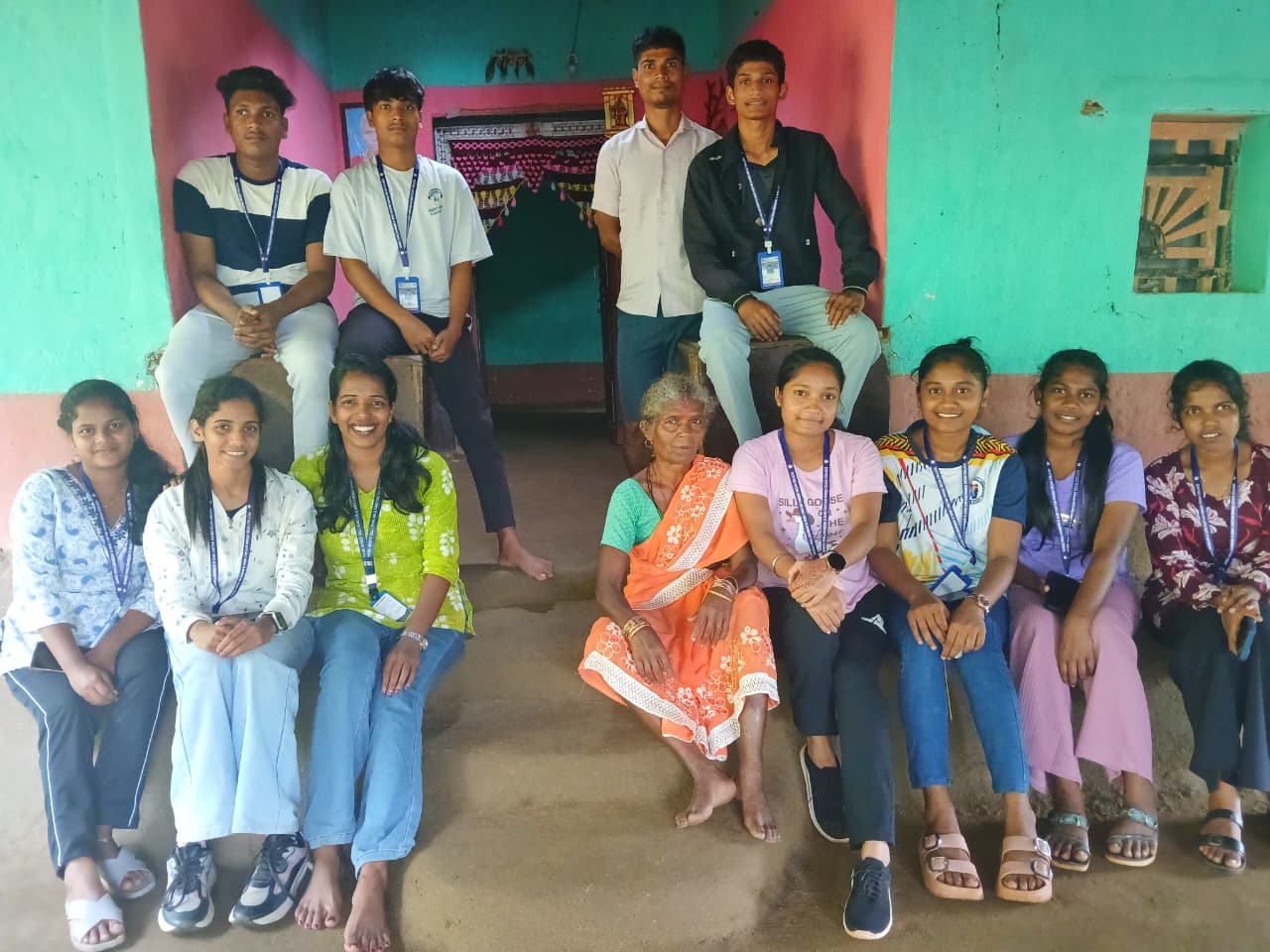
CANACONA: Students of DPM’s Shree Mallikarjun & Shri Chetan Manju Desai College undertook a challenging trek to the remote Keri tribal settlement in Cotigao as part of an educational field visit organised by the Department of Sociology.
The field visit was conducted under the academic paper Empowerment of Marginalised Groups. Sociology students trekked around 3.5 kilometres through dense forest, crossing streams, wooden bridges and slippery trails to reach the settlement.
The journey provided the students with firsthand insights into the geographical isolation and infrastructural challenges faced by the residents of Keri.
The settlement is inhabited by members of the Velip and Gaonkar tribal communities and continues to face a lack of basic facilities, including electricity and road connectivity. During their interaction with villagers, students learned about the difficulties faced by elderly persons, pregnant women and children in accessing healthcare, education, transportation and other essential services.
Residents have to walk nearly 3.5 kilometres to reach accessible transport and seek medical assistance in Canacona. During the monsoon, muddy trails, slippery slopes and leech-infested pathways make the journey particularly difficult and risky.
Despite these challenges, residents expressed their desire to remain on their ancestral land while seeking basic amenities and development opportunities without compromising their cultural identity and traditional way of life.
The visit enabled students to connect classroom concepts of marginalisation, social exclusion and deprivation with ground realities. Reflecting on the experience, TYBA Sociology student Pradnya Gosavi said, “We read about marginalisation, social exclusion and deprivation in class, but at Keri, we walked it and felt it. The leeches on our feet, the absence of electricity and the children’s long walk to school made these sociological concepts real.”
Assistant Professor Sandhya Kharat, who coordinated the field visit and was in charge of the programme, said, “The people of Keri are not seeking to abandon their identity. They want development to reach them where they are, not at the cost of displacement.”
Kharat further emphasised the importance of experiential and field-based learning, saying that direct interaction with marginalised communities helps students develop a deeper sociological understanding of society.
The field visit provided students with an opportunity to relate sociological theories to ground realities, understand the challenges arising from geographical and social exclusion, and appreciate the resilience of tribal communities.
Through such initiatives, the Department of Sociology continues to promote experiential learning and sensitise students to the lived experiences, challenges and aspirations of marginalised communities.