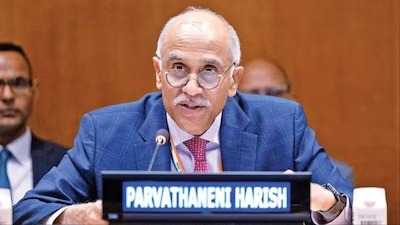
New Delhi: India delivered a firm message against terrorism at the United Nations General Assembly, stressing that acts of terror can never be justified by political, ideological or strategic reasons and urging countries to adopt a unified global approach to eliminate the threat.
Reaffirming its long standing zero tolerance policy, India stated that terrorism in every form must be condemned without exception and warned against attempts to rationalise violence through grievances or political causes. The country highlighted its own experience with cross border terrorism, pointing to the lasting impact of attacks on lives, families and communities over several decades.
India welcomed the adoption of the Ninth Review of the United Nations Global Counter Terrorism Strategy, which marks two decades since the international community recognised terrorism as a global threat requiring collective action and cooperation.
The country once again pushed for the early adoption of the Comprehensive Convention on International Terrorism, arguing that the absence of a universally accepted legal framework continues to weaken global efforts against terrorist organisations and their supporters. Such a framework would improve prosecution, extradition and action against safe havens, funding channels and arms supplies.
India also called for an end to double standards in dealing with terrorism and demanded accountability for perpetrators, organisers, financiers and sponsors of terror activities. Greater cooperation in financial intelligence sharing and stricter implementation of international standards to curb terror financing were identified as key priorities.
Concerns were also raised over the increasing use of emerging technologies by terrorist groups, including artificial intelligence, drones, deepfakes, encrypted communication platforms, virtual assets and the dark web.
India emphasised that victims of terrorism must remain central to global counter terrorism efforts and urged the international community to provide justice, dignity and rehabilitation to those affected while strengthening cooperation with developing nations and enhancing global security frameworks.