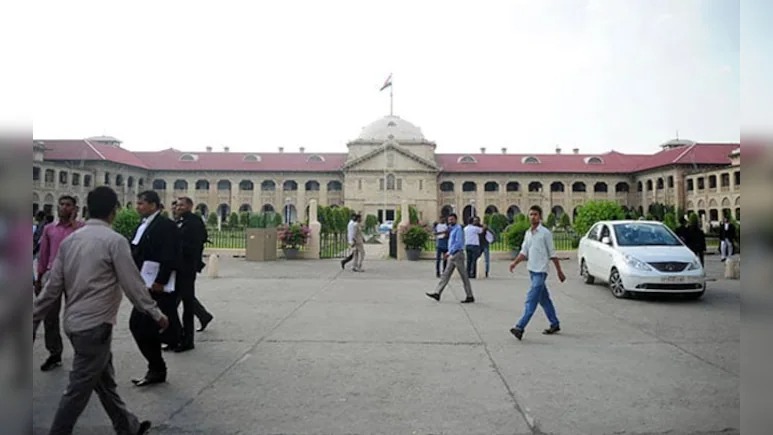
New Delhi: In a significant ruling that touches on the boundaries of free speech and patriotism, the Allahabad High Court has held that merely expressing support for Pakistan, without any reference to India or its sovereignty, does not constitute a criminal offence under Section 152 of the Bharatiya Nyaya Sanhita (BNS).
The verdict was delivered by Justice Arun Kumar Singh Deshwal while hearing a bail plea filed by 18-year-old Riyaz, who had been booked for an Instagram story that read: “Chahe jo ho jai support to bas… Pakistan ka karenge” (“Whatever happens, we will support only… Pakistan”). Riyaz was charged under Section 152 BNS, which pertains to acts endangering the sovereignty, unity, and integrity of India.
In his order, Justice Deshwal clarified that simply supporting another country, even if it’s considered an adversary, does not prima facie amount to a threat to India’s sovereignty or unity. The court observed that Riyaz’s post did not mention India or make any derogatory reference to it, and therefore did not meet the threshold required under Section 152.
The judge stated, “Merely showing support to Pakistan without referring to any incident or mentioning the name of India will not prima facie attract the offence under Section 152 BNS. For Section 152 to apply, there must be a deliberate act—via speech, writing, or electronic communication—that promotes secession, armed rebellion, or subversive activities.”
The court, however, pointed out that such posts may still potentially violate Section 196 of the BNS, which relates to creating disharmony among citizens, and carries a punishment of up to seven years.
Referencing the Supreme Court’s observation in the Imran Pratapgarhi case, the High Court emphasized that cases involving social media posts should be examined from the perspective of a reasonable, strong-minded person, rather than individuals of weak or easily influenced disposition. The judge noted that freedom of speech and expression, including on social media, is protected under the Constitution and should not be narrowly interpreted unless the content poses a serious threat to national integrity.
Riyaz’s counsel argued that his client had not made any anti-India remarks, nor had he incited violence or separatism. Given that the chargesheet had already been filed, the defense pleaded that there was no need for custodial interrogation, and that Riyaz was willing to cooperate with the judicial process.
The prosecution, however, contended that the social media post promoted separatist sentiment, thereby justifying the denial of bail.
Taking into account Riyaz’s young age, the completed chargesheet, and the absence of any explicit threat to national unity in the Instagram post, the court granted him bail. The order directed that he be released upon furnishing a personal bond and two sureties, as deemed appropriate by the trial court.
The bail conditions include a strict directive not to post any content on social media that may incite disharmony. The court further warned that any violation of these conditions would result in the cancellation of bail. Riyaz has also been instructed to cooperate fully with the trial and avoid seeking unnecessary adjournments.
The judgment is being seen as a nuanced interpretation of freedom of expression, drawing a line between free speech and actual incitement or threats to national integrity. It also highlights the growing need for clear legal standards when dealing with digital expression and national sentiment in the age of social media.
Sorry, there was a YouTube error.